Global Exchange

Designing a user-centered
currency exchange experience

Designing a user-centered
currency exchange experience

Designing a user-centered
currency exchange experience

Redesigning Global Exchange’s transactional website to encourage currency exchange earlier in the travel journey.

From a reservation-based flow to a guided, conversion-focused ecommerce experience.

Global Exchange is the leading international foreign currency exchange company, headquartered in Spain and operating across 30+ countries worldwide.

This project focused on redesigning Global Exchange’s transactional website, evolving it from a reservation-based experience into a user-centered ecommerce product.

As UX/UI Design Lead, I collaborated with internal product teams and the external agency The Cocktail, and later led a major UX iteration to simplify the purchase flow and improve usability through data-driven decisions.

Global Exchange is the leading international foreign currency exchange company, headquartered in Spain and operating across 30+ countries worldwide.

This project focused on redesigning Global Exchange’s transactional website, evolving it from a reservation-based experience into a user-centered ecommerce product.

As UX/UI Design Lead, I collaborated with internal product teams and the external agency The Cocktail, and later led a major UX iteration to simplify the purchase flow and improve usability through data-driven decisions.

Global Exchange is the leading international foreign currency exchange company, headquartered in Spain and operating across 30+ countries worldwide.

This project focused on redesigning Global Exchange’s transactional website, evolving it from a reservation-based experience into a user-centered ecommerce product.

As UX/UI Design Lead, I collaborated with internal product teams and the external agency The Cocktail, and later led a major UX iteration to simplify the purchase flow and improve usability through data-driven decisions.

Product

Product

Product

Website

Website

Website

Skills

Skills

Skills

Product design

Stakeholders management

Interactive prototyping

User research & testing

Product design

Stakeholders management

Interactive prototyping

User research & testing

Product design

Stakeholders management

Interactive prototyping

User research & testing

Role

Role

Role

Design lead

Design lead

Design lead

The Challenge

The Challenge

The Challenge

Foreign currency exchange was typically addressed late in the travel journey, often at the airport or through banks, which limited service adoption and user engagement.

The challenge was to reposition Global Exchange earlier in the traveler’s journey, clearly communicate its value proposition, and transform a rigid, reservation-based flow into a flexible, trustworthy digital experience.

Foreign currency exchange was typically addressed late in the travel journey, often at the airport or through banks, which limited service adoption and user engagement.

The challenge was to reposition Global Exchange earlier in the traveler’s journey, clearly communicate its value proposition, and transform a rigid, reservation-based flow into a flexible, trustworthy digital experience.

Foreign currency exchange was typically addressed late in the travel journey, often at the airport or through banks, which limited service adoption and user engagement.

The challenge was to reposition Global Exchange earlier in the traveler’s journey, clearly communicate its value proposition, and transform a rigid, reservation-based flow into a flexible, trustworthy digital experience.

Research & insights

UX decisions were driven by data, expert evaluation and continuous user feedback.

UX decisions were driven by data, expert evaluation and continuous user feedback.

UX decisions were driven by data, expert evaluation and continuous user feedback.

The research aimed to understand where users dropped off, why they hesitated, and how early cognitive overload and unclear value communication impacted conversion.

The research aimed to understand where users dropped off, why they hesitated, and how early cognitive overload and unclear value communication impacted conversion.

The research aimed to understand where users dropped off, why they hesitated, and how early cognitive overload and unclear value communication impacted conversion.

Methods

Methods

Methods

  • UX audit conducted with Flat 101

  • Behavioral analysis using Google Analytics and Hotjar

  • Continuous qualitative feedback from real users

  • UX audit conducted with Flat 101

  • Behavioral analysis using Google Analytics and Hotjar

  • Continuous qualitative feedback from real users

  • UX audit conducted with Flat 101

  • Behavioral analysis using Google Analytics and Hotjar

  • Continuous qualitative feedback from real users

Key insights

Key insights

Key insights

  • High cognitive load caused by too many required decisions upfront

  • Unclear value proposition during the early stages of the journey

  • Friction concentrated in the reservation-based flow, especially in legally constrained steps

  • High cognitive load caused by too many required decisions upfront

  • Unclear value proposition during the early stages of the journey

  • Friction concentrated in the reservation-based flow, especially in legally constrained steps

  • High cognitive load caused by too many required decisions upfront

  • Unclear value proposition during the early stages of the journey

  • Friction concentrated in the reservation-based flow, especially in legally constrained steps

These insights revealed that conversion issues were driven less by pricing or trust, and more by early cognitive overload and poor value communication — particularly in the reservation flow.

These insights revealed that conversion issues were driven less by pricing or trust, and more by early cognitive overload and poor value communication — particularly in the reservation flow.

These insights revealed that conversion issues were driven less by pricing or trust, and more by early cognitive overload and poor value communication — particularly in the reservation flow.

UX strategy

The redesign aligned user needs, business goals and long-term scalability, ensuring the experience could evolve alongside the product.

The redesign aligned user needs, business goals and long-term scalability, ensuring the experience could evolve alongside the product.

The redesign aligned user needs, business goals and long-term scalability, ensuring the experience could evolve alongside the product.

Key strategic principles

Key strategic principles

Key strategic principles

1.

1.

Storytelling before conversion

Storytelling before conversion

Explain the service and its value before asking users to commit.

Building value before asking for action.

2.

Scalable platform

A design built to grow with the business.

3.

Consistent value

Trust maintained throughout the entire journey.

4.

Guided flow

Clear progression with no friction.

5.

Continuous support

Value that goes beyond the purchase.

2.

Modular and scalable platform

Design a flexible structure ready for growth and future services.

3.

Value proposition as a constant

Reinforce trust, pricing clarity and benefits throughout the journey.

4.

Reduced friction in a constrained flow

Guide users through mandatory steps with progressive disclosure.

5.

Support beyond the transaction

Consider user needs before, during and after the trip.

1.

Storytelling before conversion

Explain the service and its value before asking users to commit.

2.

Modular and scalable platform

Design a flexible structure ready for growth and future services.

3.

Value proposition as a constant

Reinforce trust, pricing clarity and benefits throughout the journey.

4.

Reduced friction in a constrained flow

Guide users through mandatory steps with progressive disclosure.

5.

Support beyond the transaction

Consider user needs before, during and after the trip.

Restructuring the homepage as a storytelling-driven entry point

Restructuring the homepage as a storytelling-driven entry point

The homepage became the scalable expression of the new entry point.

The homepage became the scalable expression of the new entry point.

Once the new purchase logic was defined, the homepage was redesigned to support it at scale: introducing the service, explaining its value and progressively guiding users toward conversion.

Once the new purchase logic was defined, the homepage was redesigned to support it at scale: introducing the service, explaining its value and progressively guiding users toward conversion.

Before

Before

After

After

The previous homepage introduced the service through a transaction-first approach, forcing users to make decisions early without fully understanding the value.

This resulted in high cognitive load, limited trust and early friction.

The previous homepage introduced the service through a transaction-first approach, forcing users to make decisions early without fully understanding the value.

This resulted in high cognitive load, limited trust and early friction.

The new homepage works as a guided entry point, building understanding and trust before users reach the purchase flow.


The experience follows a clear narrative:


  • What — What the service is and the value it delivers

  • Why — What sets Global Exchange apart

  • HowClear steps to complete the challenge

  • WhenContextual, actionable CTAs

The new homepage works as a guided entry point, building understanding and trust before users reach the purchase flow.


The experience follows a clear narrative:


  • What — What the service is and the value it delivers

  • Why — What sets Global Exchange apart

  • HowClear steps to complete the challenge

  • WhenContextual, actionable CTAs

This structure sets expectations early and prepares users for a smoother, more confident purchase journey.

Restructuring the homepage as
a storytelling-driven entry point

The homepage became the scalable expression of the new entry point.

Once the new purchase logic was defined, the homepage was redesigned to support it at scale: introducing the service, explaining its value and progressively guiding users toward conversion.

Before

The previous homepage introduced the service through a transaction-first approach,
forcing users to make decisions early without fully understanding the value.

This resulted in high cognitive load, limited trust and early friction.

After

The new homepage works as a guided entry point, building understanding and trust before users reach the purchase flow.


The experience follows a clear narrative:


  • What — What the service is and the value it delivers

  • Why — What sets Global Exchange apart

  • HowClear steps to complete the challenge

  • WhenContextual, actionable CTAs

This structure sets expectations early and prepares users for a smoother, more confident purchase journey.

Solution

The experience was redesigned as a guided, user-centered ecommerce journey, replacing a rigid reservation-based form with a modular and scalable solution aligned with user needs and business goals.

The experience was redesigned as a guided, user-centered ecommerce journey, replacing a rigid reservation-based form with a modular and scalable solution aligned with user needs and business goals.

The experience was redesigned as a guided, user-centered ecommerce journey, replacing a rigid reservation-based form with a modular and scalable solution aligned with user needs and business goals.

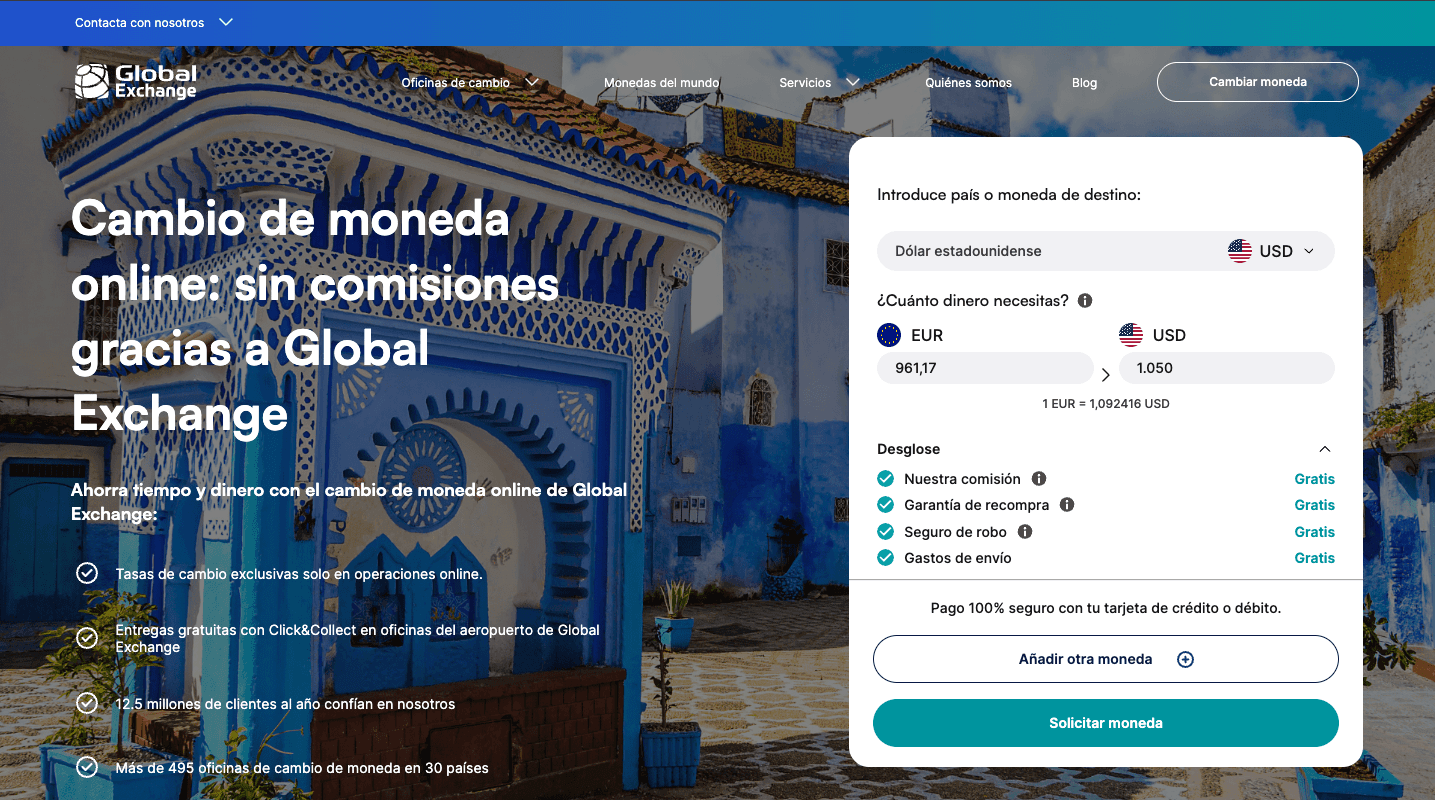
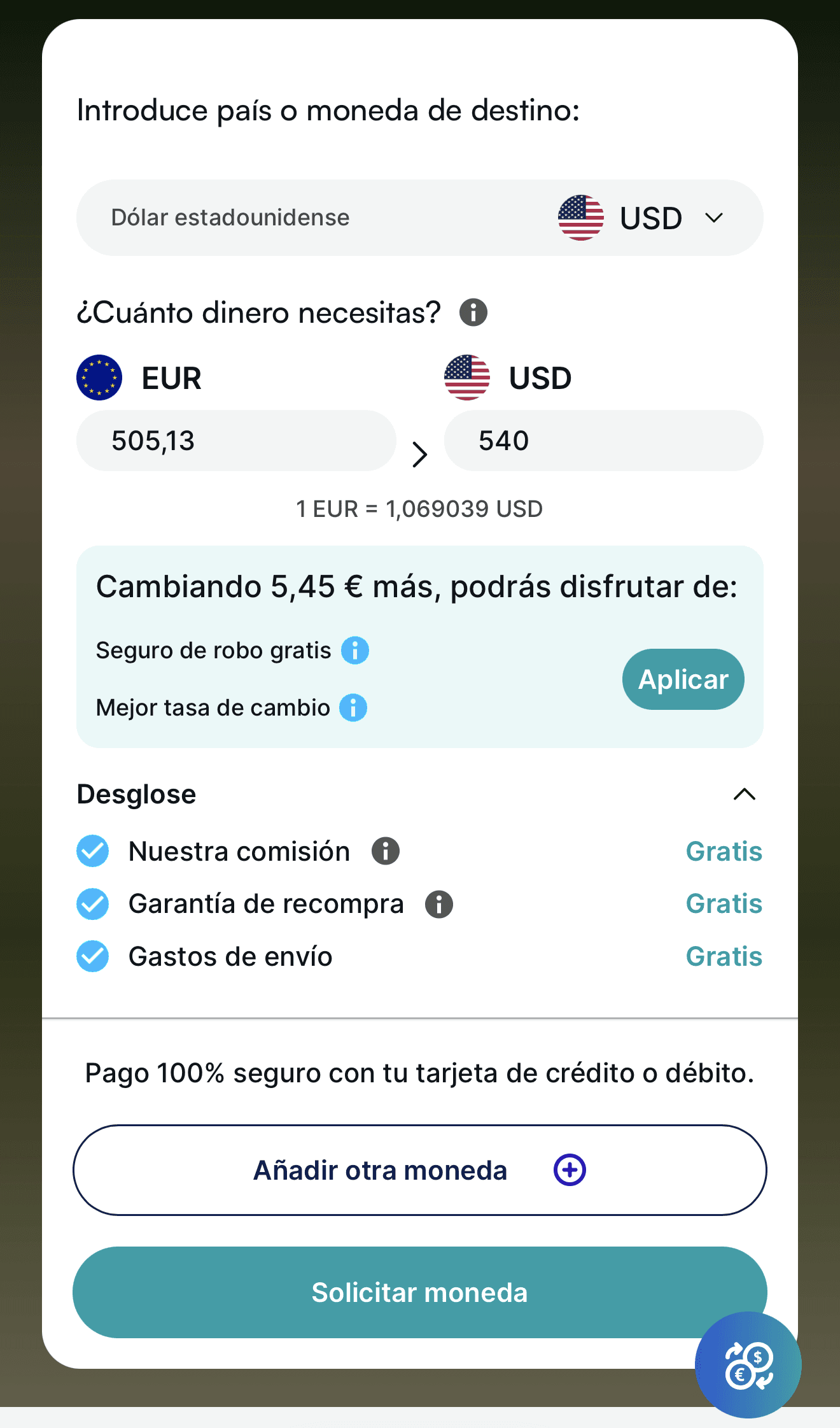
Currency selection


Clear value from the first interaction

Simplified entry point supporting multiple currencies and transparent pricing.

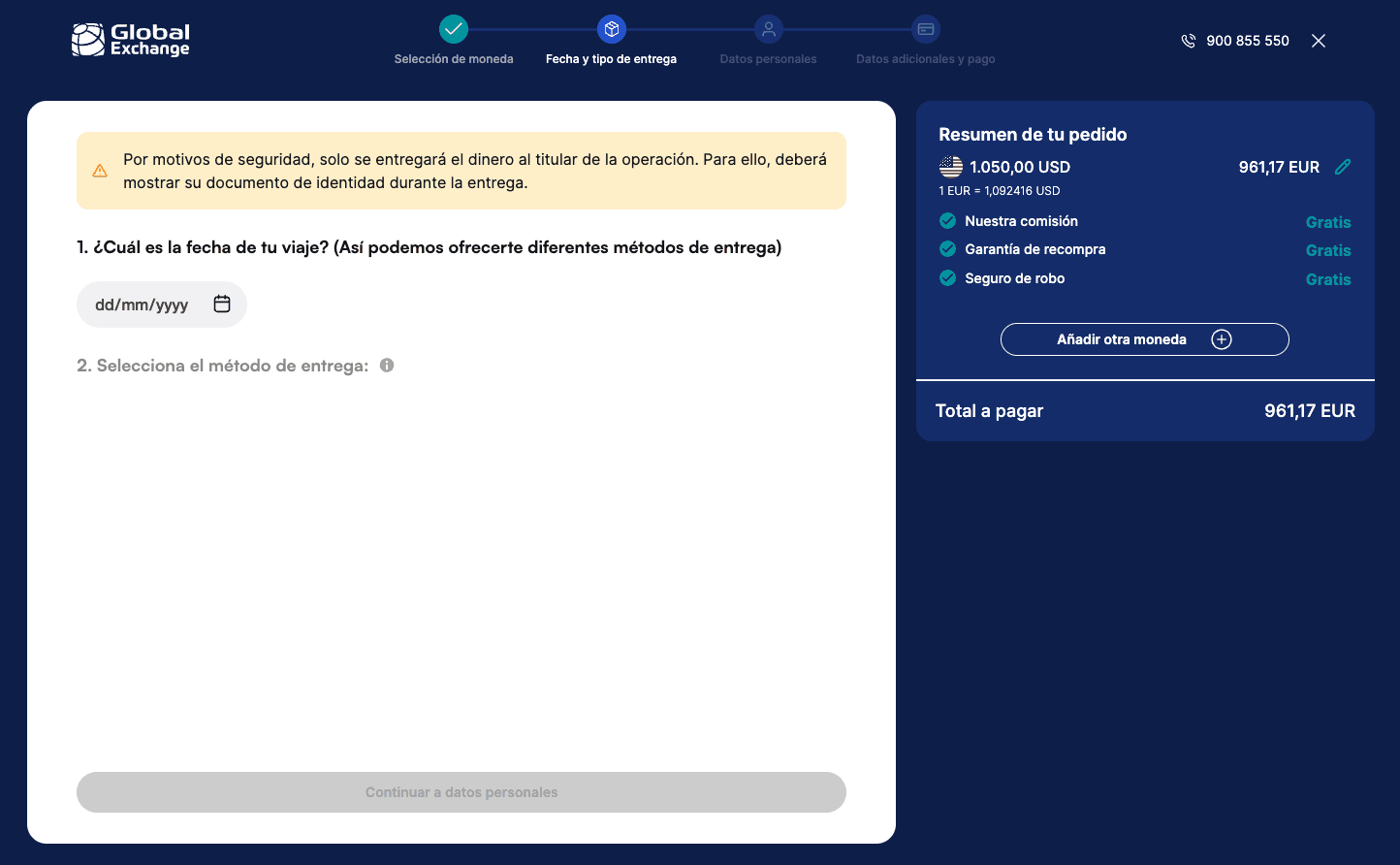
1

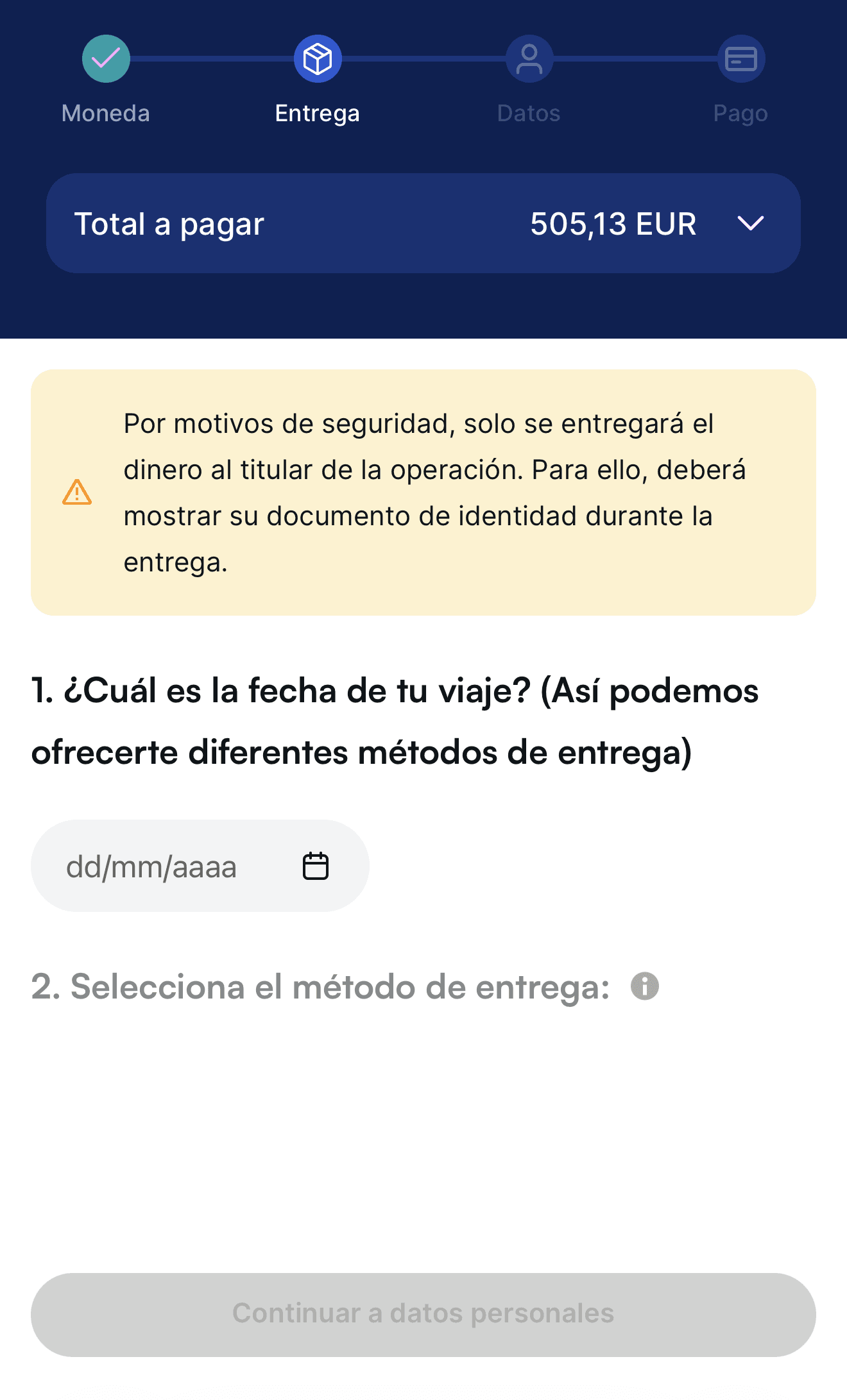
Delivery method & date

Flexible delivery, adapted to real travel contexts

Home Delivery, Click & Collect and Correos introduced early in the journey.

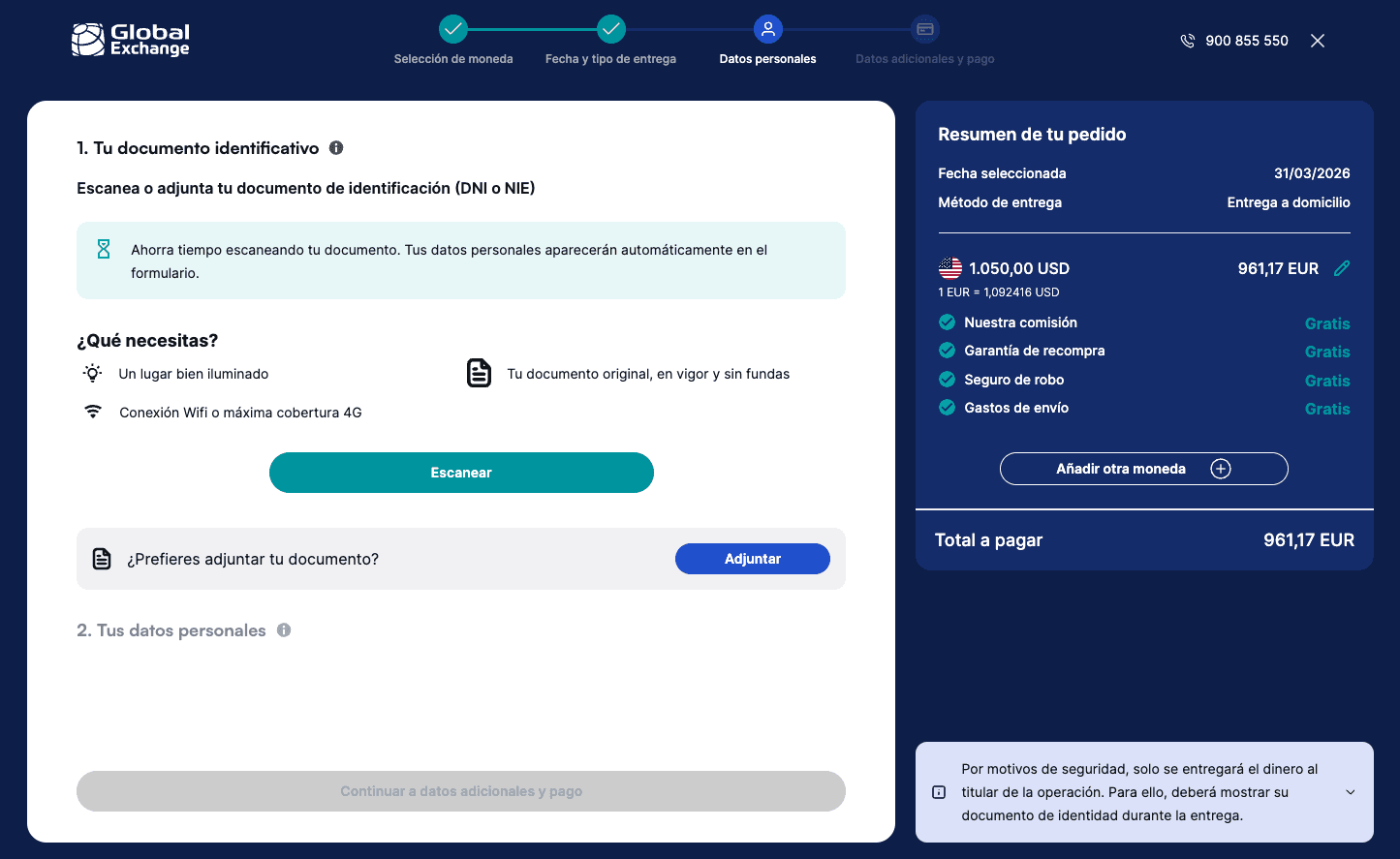
2

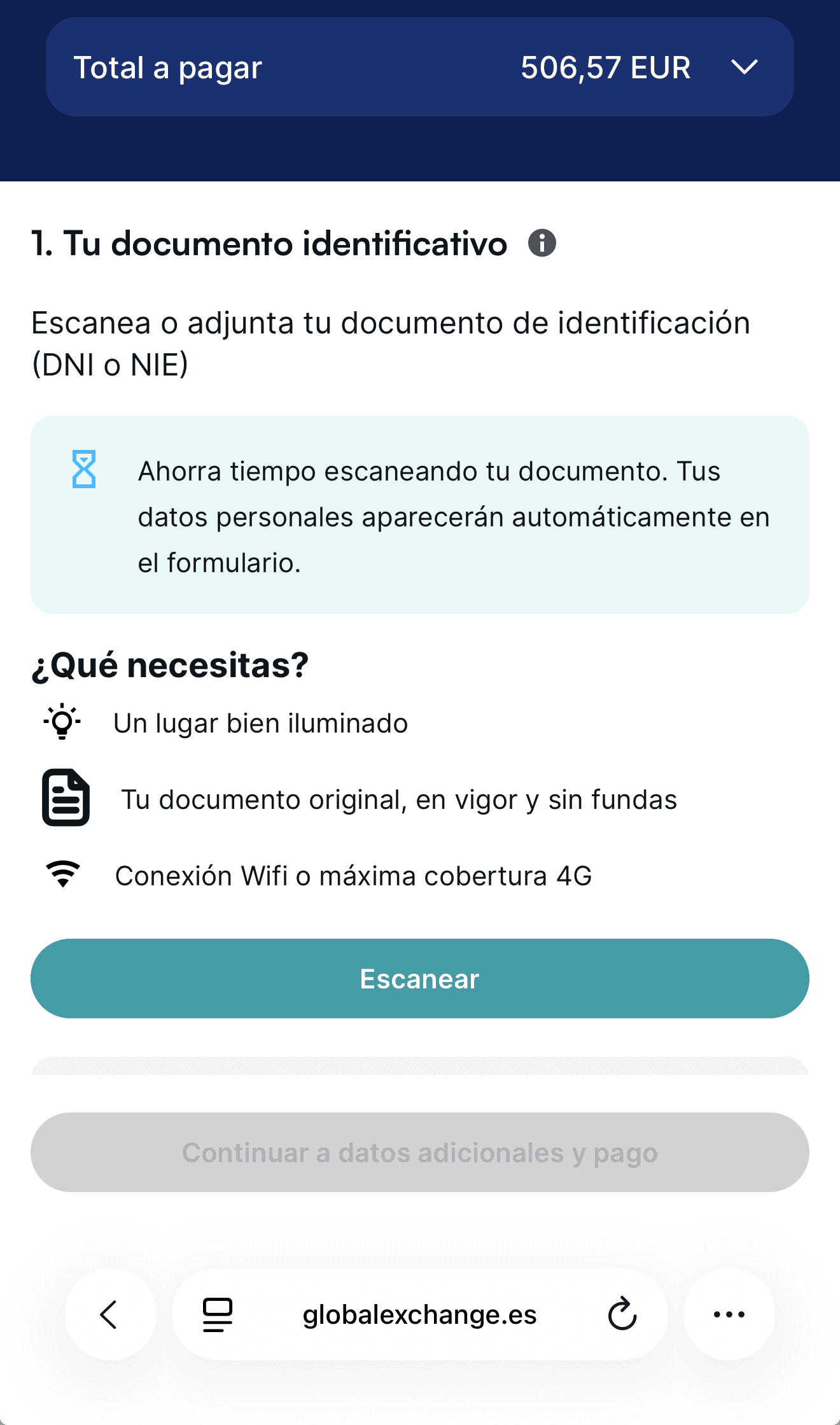
Personal data

Less effort, fewer errors

OCR scanning and auto-fill were introduced to reduce manual input, minimize errors and streamline completion of legally required personal data.

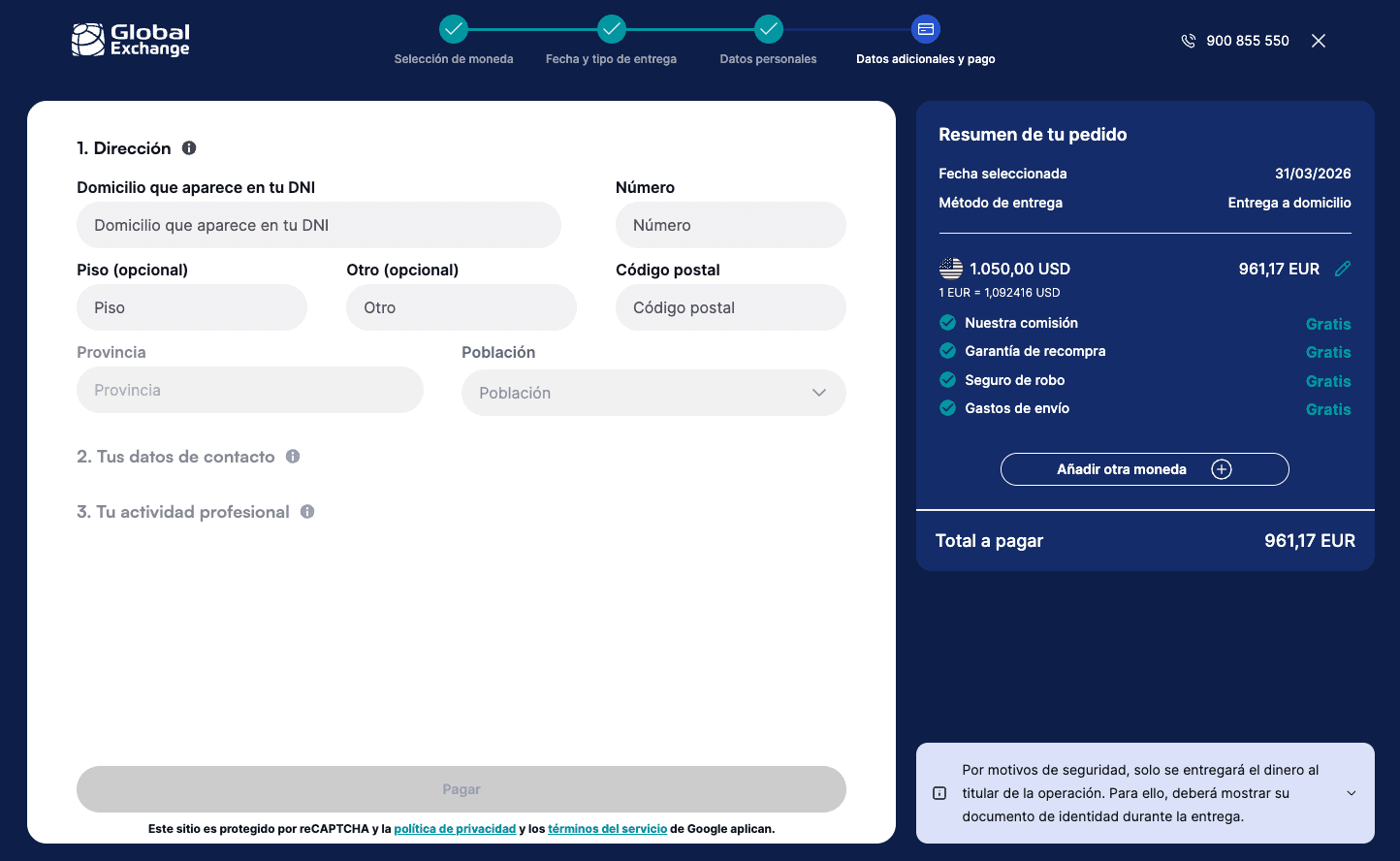
3

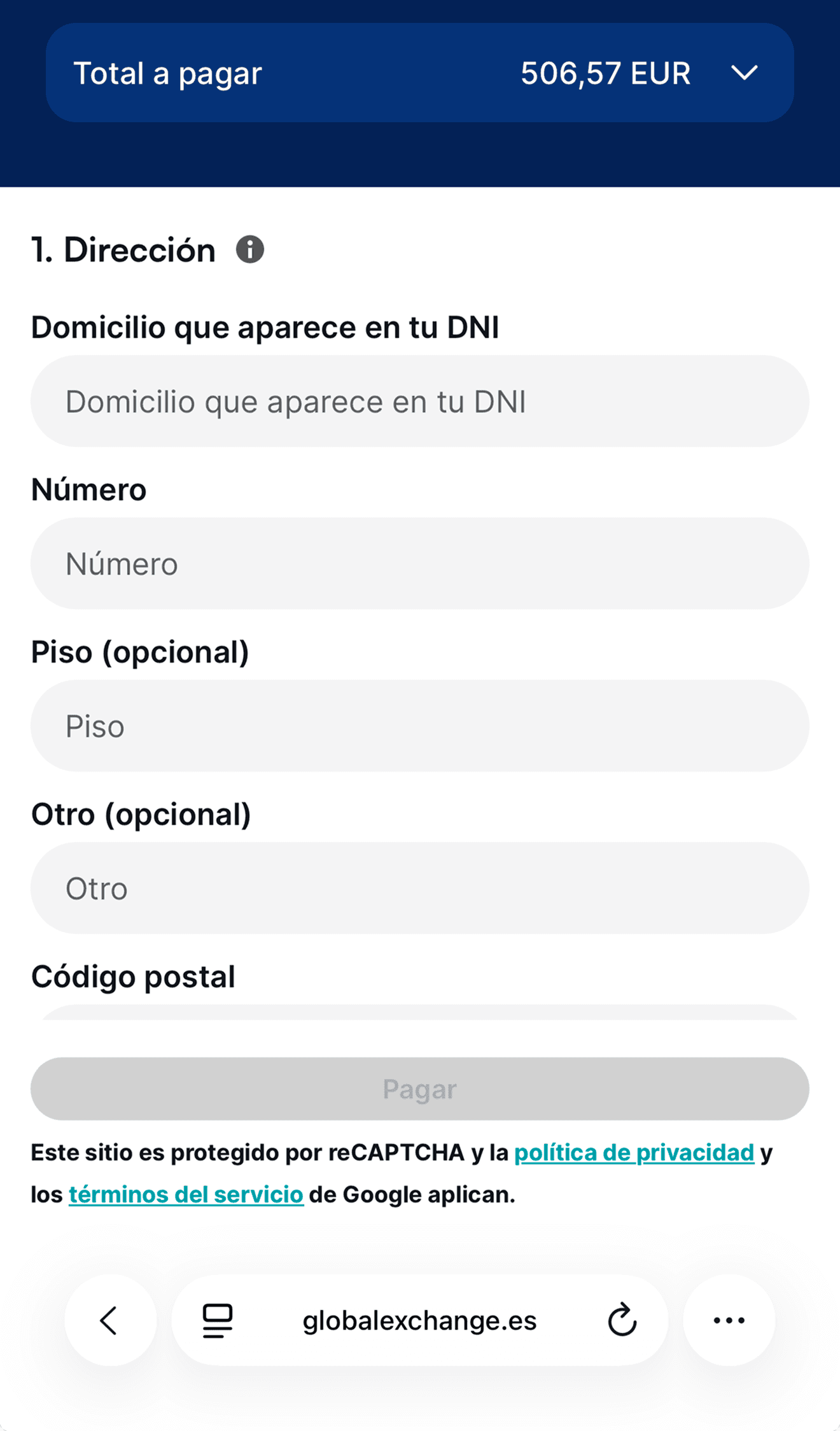
Additional data & payment

Continuity without repetition

Reused data, smooth flow, trusted completion.

4

Selección de moneda


Clear value from the first interaction

Simplified entry point supporting multiple currencies and transparent pricing.

1

Delivery method & date

Flexible delivery, adapted to real travel contexts

Domicilio, Click & Collect y Correos integrados desde las primeras etapas.


2

Datos personales


Less effort, fewer errors

OCR y autocompletado para reducir fricción y entradas manuales.


3

Additional data & payment

Continuity without repetition

Reutilización de datos para un proceso fluido y sin interrupciones.


4

Selección de moneda


Clear value from the first interaction

Simplified entry point supporting multiple currencies and transparent pricing.

1

Delivery method & date

Flexible delivery, adapted to real travel contexts

Home Delivery, Click & Collect and Correos introduced early in the journey.

2

Datos personales


Less effort, fewer errors

OCR scanning and auto-fill were introduced to reduce manual input, minimize errors and streamline completion of legally required personal data.

3

Additional data & payment

Continuity without repetition

Reused data, smooth flow, trusted completion.

4

Swipe

Swipe

Swipe

Evolving the
purchase flow

UX decisions were driven by data, expert evaluation and continuous user feedback.

UX decisions were driven by data, expert evaluation and continuous user feedback.

The research aimed to understand where users dropped off, why they hesitated, and how early cognitive overload and unclear value communication impacted conversion.

The research aimed to understand where users dropped off, why they hesitated, and how early cognitive overload and unclear value communication impacted conversion.

Initial approach

Initial approach

Single-page reservation form

Too many decisions upfront, resulting in high cognitive load.

Too many decisions upfront, resulting in high cognitive load.

Multiple required actions (office, date, personal data, legal acceptance) led to early abandonment before users understood the service value.

Multiple required actions (office, date, personal data, legal acceptance) led to early abandonment before users understood the service value.

Intermediate approach

Step-based visual redesign

Visual structure improved clarity and reduced initial friction.

However, competing information still distracted users and weakened focus, limiting the effectiveness of the flow.

Visual improvement, structural limitations

Final approach

Guided four-step purchase flow

A guided flow that structures complexity and supports confident decisions.

Progressive disclosure and information reuse reduced friction, especially in legally constrained steps, improving completion and clarity.

Clarity, focus and confidence

Intermediate approach

Step-based visual redesign

Visual structure improved clarity and reduced initial friction.

However, competing information still distracted users and weakened focus, limiting the effectiveness of the flow.

Visual improvement, structural limitations

Final approach

Guided four-step purchase flow

A guided flow that structures complexity and supports confident decisions.

Progressive disclosure and information reuse reduced friction, especially in legally constrained steps, improving completion and clarity.

Clarity, focus and confidence

Evolving the
purchase flow

UX decisions were driven by data, expert evaluation and continuous user feedback.

The research aimed to understand where users dropped off, why they hesitated, and how early cognitive overload and unclear value communication impacted conversion.

Initial approach

Single-page reservation form

Too many decisions upfront, resulting in high cognitive load.

Multiple required actions (office, date, personal data, legal acceptance) led to early abandonment before users understood the service value.

Intermediate approach

Step-based visual redesign

Visual structure improved clarity and reduced initial friction.

However, competing information still distracted users and weakened focus, limiting the effectiveness of the flow.

Visual improvement, structural limitations

Final approach

Guided four-step purchase flow

A guided flow that structures complexity and supports confident decisions.

Progressive disclosure and information reuse reduced friction, especially in legally constrained steps, improving completion and clarity.

Clarity, focus and confidence

Outcome

Outcome


From a rigid reservation system to a scalable, user-centered ecommerce experience

From a rigid reservation system to a scalable, user-centered ecommerce experience

From a rigid reservation system to a scalable, user-centered ecommerce experience

The final outcome was a transactional experience that successfully moved currency exchange earlier in the travel journey — transforming it from a last-minute task into a confident, planned decision.

The final outcome was a transactional experience that successfully moved currency exchange earlier in the travel journey — transforming it from a last-minute task into a confident, planned decision.

The final outcome was a transactional experience that successfully moved currency exchange earlier in the travel journey — transforming it from a last-minute task into a confident, planned decision.

The redesigned flow replaced a dense, reservation-based form with a guided, step-by-step purchase journey, reducing cognitive load and helping users understand pricing, delivery options and requirements progressively. This structure allowed users to move forward with clarity, even within a legally constrained process.

The redesigned flow replaced a dense, reservation-based form with a guided, step-by-step purchase journey, reducing cognitive load and helping users understand pricing, delivery options and requirements progressively. This structure allowed users to move forward with clarity, even within a legally constrained process.

The redesigned flow replaced a dense, reservation-based form with a guided, step-by-step purchase journey, reducing cognitive load and helping users understand pricing, delivery options and requirements progressively. This structure allowed users to move forward with clarity, even within a legally constrained process.

Beyond the purchase flow, the experience evolved into a flexible and scalable ecommerce platform, capable of supporting different traveler profiles, delivery contexts and future service expansion — while reinforcing Global Exchange’s value proposition and trust signals throughout the journey.

Beyond the purchase flow, the experience evolved into a flexible and scalable ecommerce platform, capable of supporting different traveler profiles, delivery contexts and future service expansion — while reinforcing Global Exchange’s value proposition and trust signals throughout the journey.

Beyond the purchase flow, the experience evolved into a flexible and scalable ecommerce platform, capable of supporting different traveler profiles, delivery contexts and future service expansion — while reinforcing Global Exchange’s value proposition and trust signals throughout the journey.

The result is a clearer, more trustworthy experience that aligns real user behavior with business growth goals.

The result is a clearer, more trustworthy experience that aligns real user behavior with business growth goals.

The result is a clearer, more trustworthy experience that aligns real user behavior with business growth goals.

Impact & results YoY

Measuring the business impact of a guided, user-centered ecommerce experience.

Measuring the business impact of a guided, user-centered ecommerce experience.

Measuring the business impact of a guided, user-centered ecommerce experience.

Measurable business outcomes:

Measurable business outcomes:

+200%

+200%

+200%

Organic user growth

Organic user growth

Organic user growth

x8+

x8+

Conversion rate increase


Conversion rate increase


+100%

+100%

Increase in total
transactions

Learnings

Learnings

Key UX principles reinforced through a high-impact, legally constrained redesign

Key UX principles reinforced through a high-impact, legally constrained redesign

Key UX principles reinforced through a high-impact, legally constrained redesign

Structuring complexity beats removing it


Structuring complexity beats removing it


Structuring complexity beats removing it


Removing steps wasn’t an option in a legally constrained flow.

Removing steps wasn’t an option in a legally constrained flow.

Breaking complexity into clear, progressive steps reduced cognitive load and helped users make confident decisions without feeling overwhelmed.

Breaking complexity into clear, progressive steps reduced cognitive load and helped users make confident decisions without feeling overwhelmed.

Timing matters more than information volume

Timing matters more than information volume

Timing matters more than information volume

The issue wasn’t too much information, but when it was presented.

The issue wasn’t too much information, but when it was presented.

By revealing pricing, delivery options and requirements progressively, users could focus on one decision at a time, improving comprehension and conversion.

Trust is built through clarity, not reassurance

Trust is built through clarity, not reassurance

Trust is built through clarity, not reassurance

Trust signals are most effective when embedded naturally in the journey.

Trust signals are most effective when embedded naturally in the journey.

Clear summaries, transparent pricing and predictable steps proved more powerful than adding extra reassurance messages.

Data points direction, insights shape solutions

Data points direction, insights shape solutions

Quantitative data showed where users dropped off.

Quantitative data showed where users dropped off.

Qualitative insights explained why—enabling confident UX decisions and meaningful iteration.


Qualitative insights explained why—enabling confident UX decisions and meaningful iteration.


Crafted with care - fueled by curiosity and coffee

®2026 Andrea Espinal

Crafted with care - fueled by curiosity and coffee

®2026 Andrea Espinal

Crafted with care - fueled by curiosity and coffee

®2026 Andrea Espinal