Grupo Ecotisa
Designing a strategic rebranding for Winkle: an industrial 3D filament manufacturer
Transforming a low-visibility manufacturing brand into a clear, reliable, and scalable identity, designed to compete in international markets and connect with both distributors and the maker community.
From an industrial-first identity to a brand system built for clarity, differentiation, and long-term growth.
Winkle is an international 3D filament manufacturer, producing both its own branded products and private-label solutions for distributors across multiple markets.
Before the rebranding, the company operated under the name All Color Materials 3D, functioning primarily as a manufacturing-driven business with little focus on brand positioning or marketing. While the product quality was high, the brand lacked visibility, differentiation, and a clear connection with the maker community.
Following the acquisition of the company, the project focused on a full strategic rebranding, redefining the brand from the ground up to support international growth, strengthen market recognition, and create a consistent, scalable identity capable of competing with established global brands.
Winkle is an international 3D filament manufacturer, producing both its own branded products and private-label solutions for distributors across multiple markets.
Before the rebranding, the company operated under the name All Color Materials 3D, functioning primarily as a manufacturing-driven business with little focus on brand positioning or marketing. While the product quality was high, the brand lacked visibility, differentiation, and a clear connection with the maker community.
Following the acquisition of the company, the project focused on a full strategic rebranding, redefining the brand from the ground up to support international growth, strengthen market recognition, and create a consistent, scalable identity capable of competing with established global brands.
Winkle is an international 3D filament manufacturer, producing both its own branded products and private-label solutions for distributors across multiple markets.
Before the rebranding, the company operated under the name All Color Materials 3D, functioning primarily as a manufacturing-driven business with little focus on brand positioning or marketing. While the product quality was high, the brand lacked visibility, differentiation, and a clear connection with the maker community.
Following the acquisition of the company, the project focused on a full strategic rebranding, redefining the brand from the ground up to support international growth, strengthen market recognition, and create a consistent, scalable identity capable of competing with established global brands.
Product
Product
Product
Brand identity system
Skills
Skills
Skills
Brand strategy
Visual identity
Design systems
Stakeholder alignment
Brand strategy
Visual identity
Design systems
Stakeholder alignment
Brand strategy
Visual identity
Design systems
Stakeholder alignment
Role
Role
Role
Brand & Visual Designer
The challenge
The challenge was to redefine an industrial manufacturing brand that had grown with little attention to branding or differentiation, and reposition it to compete in a crowded international market.
Although the company produced high-quality 3D filaments and worked closely with distributors, the existing brand felt obsolete, distant, and difficult to distinguish from competitors. It failed to communicate the quality, reliability, and technical expertise behind the product, especially to the maker community, which plays a key role in influencing purchasing decisions.
The rebranding needed to strike a careful balance: creating a modern and recognizable identity without losing industrial credibility, avoiding generic visual clichés, and building a brand system capable of scaling across products, packaging, and digital channels, all within real production and cost constraints.
The challenge was to redefine an industrial manufacturing brand that had grown with little attention to branding or differentiation, and reposition it to compete in a crowded international market.
Although the company produced high-quality 3D filaments and worked closely with distributors, the existing brand felt obsolete, distant, and difficult to distinguish from competitors. It failed to communicate the quality, reliability, and technical expertise behind the product, especially to the maker community, which plays a key role in influencing purchasing decisions.
The rebranding needed to strike a careful balance: creating a modern and recognizable identity without losing industrial credibility, avoiding generic visual clichés, and building a brand system capable of scaling across products, packaging, and digital channels, all within real production and cost constraints.
The challenge was to redefine an industrial manufacturing brand that had grown with little attention to branding or differentiation, and reposition it to compete in a crowded international market.
Although the company produced high-quality 3D filaments and worked closely with distributors, the existing brand felt obsolete, distant, and difficult to distinguish from competitors. It failed to communicate the quality, reliability, and technical expertise behind the product, especially to the maker community, which plays a key role in influencing purchasing decisions.
The rebranding needed to strike a careful balance: creating a modern and recognizable identity without losing industrial credibility, avoiding generic visual clichés, and building a brand system capable of scaling across products, packaging, and digital channels, all within real production and cost constraints.
Brand goals
Increase brand recognition among makers
One of the key objectives was to build brand awareness within the maker community, positioning Winkle beyond a purely industrial manufacturer and closer to the end users who influence purchasing decisions through recommendations and demand.
The brand needed to feel recognizable, familiar, and accessible, without losing its technical credibility.
Differentiate in a crowded international market
Communicate quality and reliability
Build a scalable brand system
Avoid becoming a generic brand
Increase brand recognition among makers
One of the key objectives was to build brand awareness within the maker community, positioning Winkle beyond a purely industrial manufacturer and closer to the end users who influence purchasing decisions through recommendations and demand.
The brand needed to feel recognizable, familiar, and accessible, without losing its technical credibility.
Differentiate in a crowded international market
Communicate quality and reliability
Build a scalable brand system
Avoid becoming a generic brand
Increase brand recognition among makers
One of the key objectives was to build brand awareness within the maker community, positioning Winkle beyond a purely industrial manufacturer and closer to the end users who influence purchasing decisions through recommendations and demand.
The brand needed to feel recognizable, familiar, and accessible, without losing its technical credibility.
Differentiate in a crowded international market
Communicate quality and reliability
Build a scalable brand system
Avoid becoming a generic brand
Brand strategy
The rebranding of Winkle started from the need to build a distinctive, scalable brand in a highly competitive global market, while remaining grounded in the physical reality of the product.
Rather than relying on superficial differentiation, the strategy focused on defining a clear brand foundation that could support long-term growth, consistency across touchpoints, and recognition among both distributors and makers.
Positioning
Winkle was positioned as a reliable, modern, and approachable filament brand, designed to stand out without competing on noise or technical complexity.
The goal was not to appear experimental or niche, but to feel confident and professional, balancing industrial credibility with a tone that felt close to the maker community.
Conceptual foundation
The name Winkle and its visual direction were grounded in a conceptual reference to scale and form.
A winkle is a small marine snail living in vast environments, a metaphor that reflects the brand’s context: a specialized product operating within a large and crowded international market.
At the same time, the spiral structure of the shell directly connects to the physical nature of 3D filament, which is produced, stored, and used in a coiled format. This allowed the brand concept to emerge from the product itself, rather than from arbitrary symbolism.
This conceptual approach ensured the identity felt intentional, ownable, and rooted in meaning, while remaining flexible enough to support a system-based brand across packaging, digital, and physical applications.
Strategic intent
The brand strategy aimed to:
Build recognition without relying on trends
Create a coherent system easy to apply across products and markets
Balance functional clarity with a strong, memorable identity
Support both B2B distribution and B2C brand awareness
Build recognition without relying on trends
Create a coherent system easy to apply across products and markets
Balance functional clarity with a strong, memorable identity
Support both B2B distribution and B2C brand awareness
Build recognition without relying on trends
Create a coherent system easy to apply across products and markets
Balance functional clarity with a strong, memorable identity
Support both B2B distribution and B2C brand awareness
This foundation set the stage for a visual system that could scale with the business, evolve over time, and remain consistent regardless of channel or market.
Visual system
The visual identity was designed as a scalable system, focused on consistency, production viability, and long-term use across products and channels.
Each element follows a set of shared principles, prioritizing clarity, recognition, and ease of application over decorative complexity.
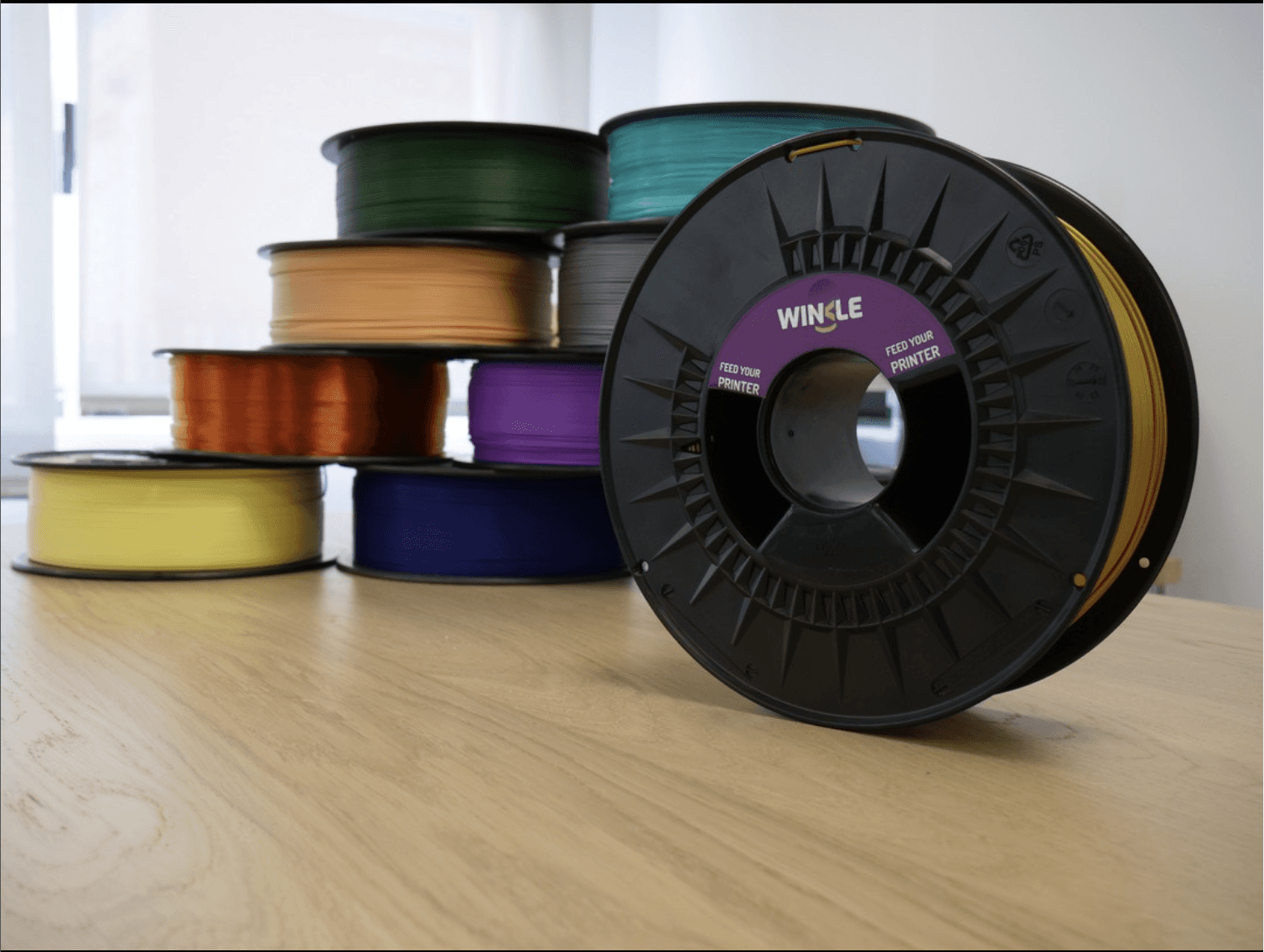
Bold, functional color
Primary brand identifier
Color was designed to drive instant recognition in a saturated market while remaining production-ready.
A limited and bold palette reinforces consistency without competing with technical product information.

System-first logo
Build to scale
The logo behaves as a structural element, not a decorative symbol.
Its simplicity ensures clarity, scalability, and reproducibility across industrial and digital applications.

Clear, technical typography
Designed for readability
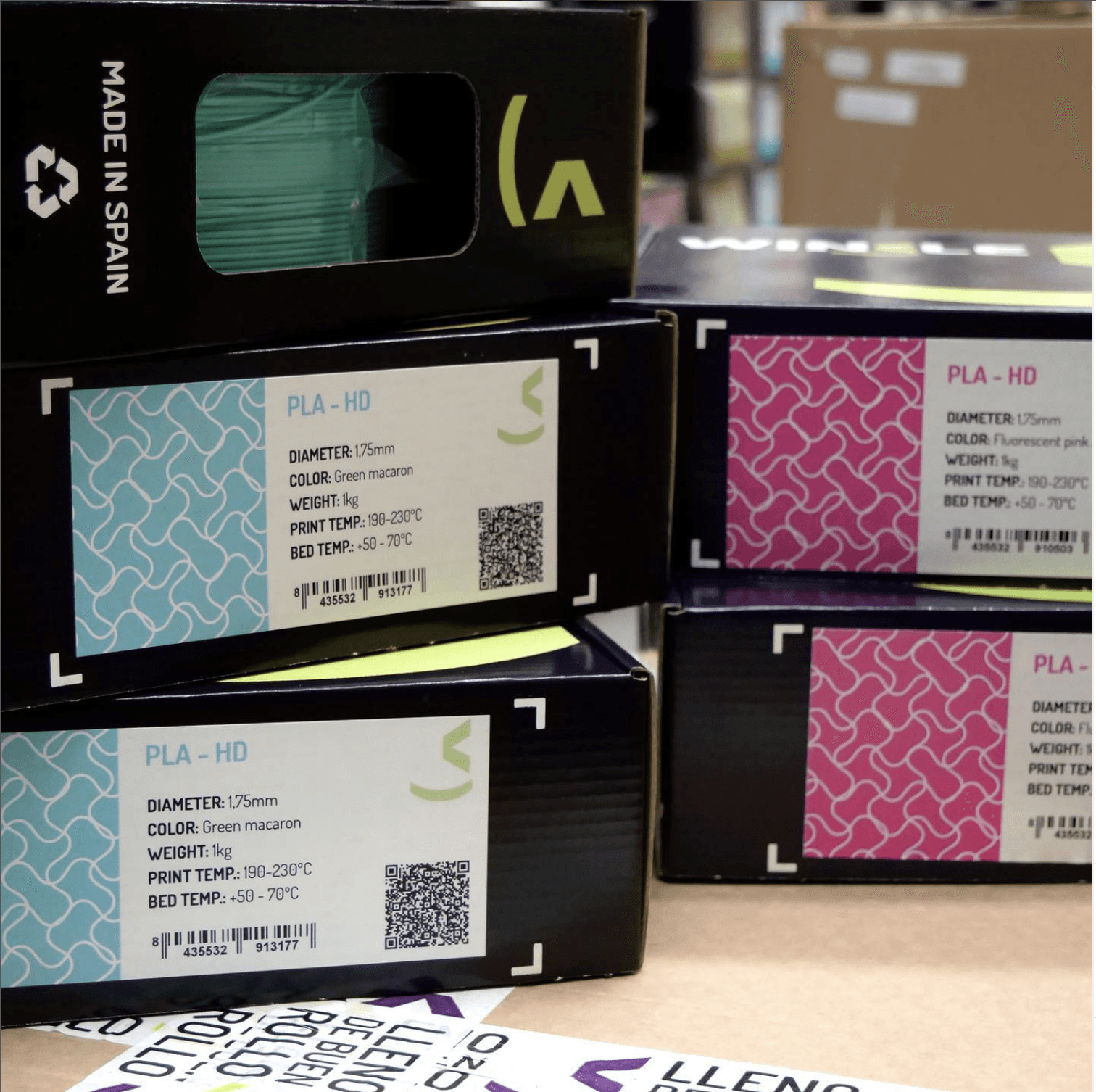
Typography balances technical precision with approachability, prioritizing legibility across packaging, labels, and digital touchpoints.
The system avoids stylistic excess in favor of consistency and usability.

Packaging as a system
Not a single asset
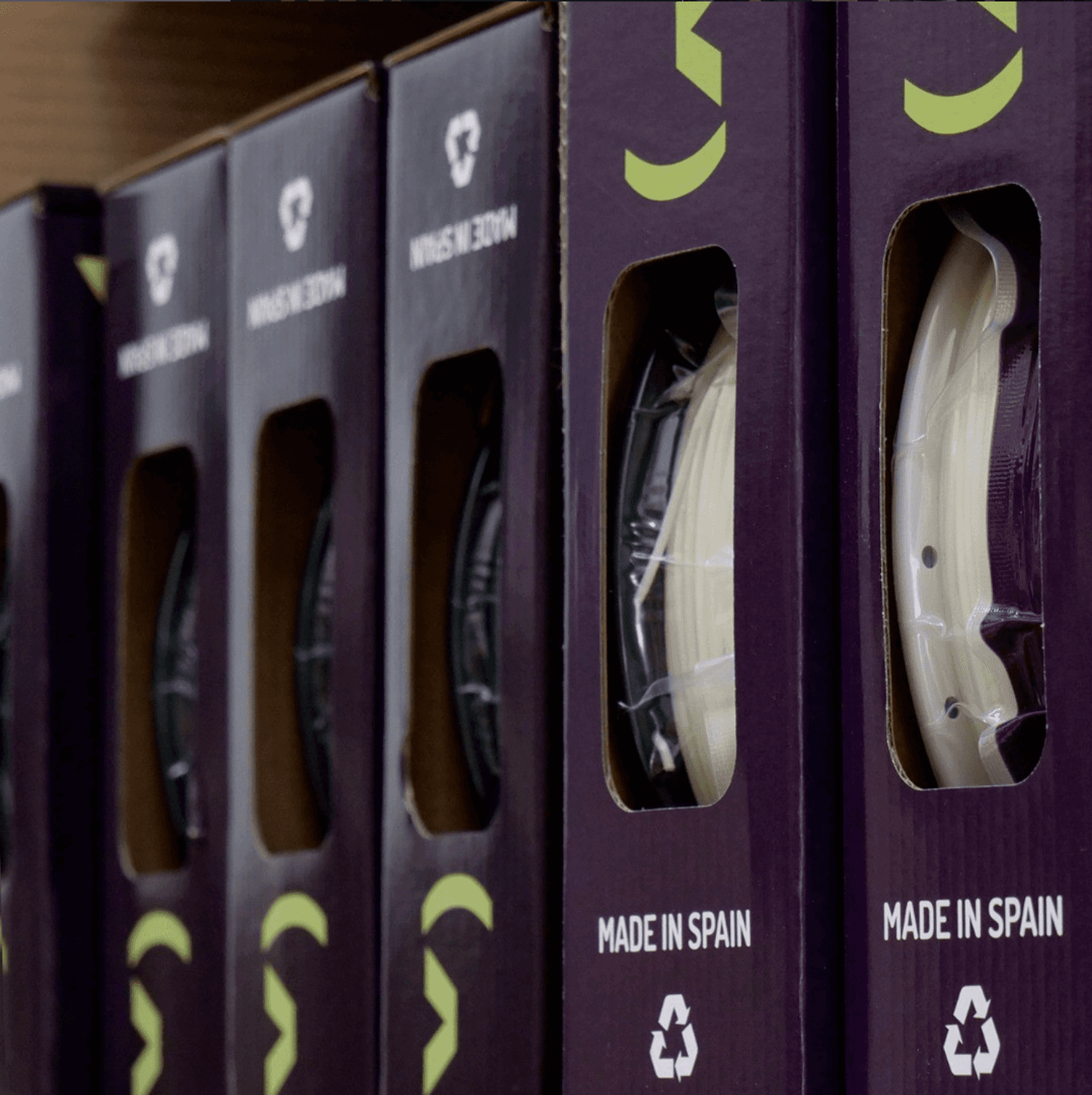
Packaging was designed as a modular system focused on scalability, cost efficiency, and ease of production, without fragmenting the brand.
Customer feedback confirmed it as a highly valued element and a key brand differentiator for Winkle.

Direct brand voice
Close to the maker community
The verbal identity is confident, clear, and accessible, connecting with makers while maintaining industrial credibility.
Messaging supports the visual system without over-explaining or adding noise.

Build to evolve
Scalable by design
The visual system prioritizes long-term consistency and maintainability.
Design decisions favor system logic over decoration, allowing the brand to grow without losing coherence.

Bold, functional color
Primary brand identifier
Color was designed to drive instant recognition in a saturated market while remaining production-ready.
A limited and bold palette reinforces consistency without competing with technical product information.

System-first logo
Build to scale
The logo behaves as a structural element, not a decorative symbol.
Its simplicity ensures clarity, scalability, and reproducibility across industrial and digital applications.

Clear, technical typography
Designed for readability
Typography balances technical precision with approachability, prioritizing legibility across packaging, labels, and digital touchpoints.
The system avoids stylistic excess in favor of consistency and usability.

Packaging as a system
Not a single asset
Packaging was designed as a modular system focused on scalability, cost efficiency, and ease of production, without fragmenting the brand.
Customer feedback confirmed it as a highly valued element and a key brand differentiator for Winkle.

Direct brand voice
Close to the maker community
The verbal identity is confident, clear, and accessible, connecting with makers while maintaining industrial credibility.
Messaging supports the visual system without over-explaining or adding noise.

Build to evolve
Scalable by design
The visual system prioritizes long-term consistency and maintainability.
Design decisions favor system logic over decoration, allowing the brand to grow without losing coherence.

Swipe
Swipe
Constraints &
trade-offs
Restricciones y trade-offs
Designing the Winkle brand system required balancing strategic ambition with real-world constraints, ensuring the identity could be executed consistently across production, distribution, and future growth.
Definir un alcance claro del MVP fue clave para equilibrar velocidad, riesgo y aprendizaje en un entorno fintech regulado.
Designing the Winkle brand system required balancing strategic ambition with real-world constraints, ensuring the identity could be executed consistently across production, distribution, and future growth.
Rather than treating constraints as limitations, they were used as inputs to guide design decisions.
Production and cost constraints
As an industrial product brand, Winkle needed to operate within strict production and cost limitations.
Design decisions prioritized simplicity, repeatability, and scalability, avoiding finishes or solutions that could increase manufacturing complexity or operational overhead.
Differentiation within a crowded market
The 3D filament market is highly competitive and visually saturated.
A key trade-off was avoiding familiar category shortcuts in favor of building a distinctive yet clear system, capable of standing out without compromising credibility or usability.
This required resisting trend-driven aesthetics in favor of a timeless, system-led approach.
Internal brand differentiation
As part of a larger corporate group, the brand needed to clearly differentiate itself from existing identities.
One deliberate decision was to avoid animal-based symbols, commonly used across other group brands, reinforcing Winkle’s ownable and independent identity.
Balancing expression and usability
The brand needed personality, but never at the expense of function.
Visual expressiveness was carefully controlled to ensure technical clarity, label readability, and distributor requirements were always prioritized.
Estrategia de UX y
diseño conversacional
La experiencia conversacional se diseñó para equilibrar flexibilidad y control, permitiendo a los usuarios obtener respuestas rápidas sin comprometer claridad, consistencia ni cumplimiento normativo en distintos mercados.
En lugar de buscar un chatbot abierto, el foco estuvo en diseñar un sistema conversacional fiable, capaz de guiar al usuario, gestionar expectativas y derivar a soporte humano cuando fuese necesario.
Bold, functional color
Primary brand identifier
Color was designed to drive instant recognition in a saturated market while remaining production-ready.
A limited and bold palette reinforces consistency without competing with technical product information.

System-first logo
Build to scale
The logo behaves as a structural element, not a decorative symbol.
Its simplicity ensures clarity, scalability, and reproducibility across industrial and digital applications.

Clear, technical typography
Designed for readability
Typography balances technical precision with approachability, prioritizing legibility across packaging, labels, and digital touchpoints.
The system avoids stylistic excess in favor of consistency and usability.

Packaging as a system
Not a single asset
Packaging was designed as a modular system focused on scalability, cost efficiency, and ease of production, without fragmenting the brand.
Customer feedback confirmed it as a highly valued element and a key brand differentiator for Winkle.

Direct brand voice
Close to the maker community
The verbal identity is confident, clear, and accessible, connecting with makers while maintaining industrial credibility.
Messaging supports the visual system without over-explaining or adding noise.

Build to evolve
Scalable by design
The visual system prioritizes long-term consistency and maintainability.
Design decisions favor system logic over decoration, allowing the brand to grow without losing coherence.

Swipe
Brand impact &
outcomes
Brand impact & outcomes
The rebranding of Winkle established a clear, consistent brand foundation, enabling the company to compete more confidently in an international and highly competitive market.
Rather than focusing on short-term campaigns, the project prioritized building a long-term brand system that could support growth, recognition, and operational consistency.
Brand perception
The new identity positioned Winkle as a reliable, modern, and approachable brand, aligning visual and verbal expression with the quality of the product.
The system helped shift perception from a low-visibility manufacturer to a recognizable brand with its own voice and presence.
Intern alignment
The brand system provided a shared framework for marketing, packaging, and communication teams.
Clear rules and principles made the brand easier to apply, maintain, and evolve, reducing friction in day-to-day execution.
Strategic value
By grounding the identity in system logic and production realities, the brand is better prepared to:
Scale across products and markets
Maintain consistency over time
Support both B2B distribution and B2C brand awareness
Scale across products and markets
Maintain consistency over time
Support both B2B distribution and B2C brand awareness
Scale across products and markets
Maintain consistency over time
Support both B2B distribution and B2C brand awareness
The outcome was not just a visual refresh, but a strategic asset for the business.
Learnings & next steps
Key learnings
Brand systems outperform one-off identities
Designing a system, rather than isolated assets, enabled consistency, scalability, and easier long-term management.
Constraints improve decision-making
Production, cost, and distribution limitations helped sharpen the brand, forcing clarity and prioritization over decorative solutions.
Differentiation doesn’t require complexity
In a crowded market, a clear and confident system proved more effective than trend-driven or over-designed identities.
Conceptual grounding strengthens longevity
Anchoring the brand in the product’s physical reality made the identity more ownable and easier to evolve.
Next steps
Key learnings
Brand systems outperform one-off identities
Designing a system, rather than isolated assets, enabled consistency, scalability, and easier long-term management.
Constraints improve decision-making
Production, cost, and distribution limitations helped sharpen the brand, forcing clarity and prioritization over decorative solutions.
Differentiation doesn’t require complexity
In a crowded market, a clear and confident system proved more effective than trend-driven or over-designed identities.
Conceptual grounding strengthens longevity
Anchoring the brand in the product’s physical reality made the identity more ownable and easier to evolve.
Next steps
Key learnings
Brand systems outperform one-off identities
Designing a system, rather than isolated assets, enabled consistency, scalability, and easier long-term management.
Constraints improve decision-making
Production, cost, and distribution limitations helped sharpen the brand, forcing clarity and prioritization over decorative solutions.
Differentiation doesn’t require complexity
In a crowded market, a clear and confident system proved more effective than trend-driven or over-designed identities.
Conceptual grounding strengthens longevity
Anchoring the brand in the product’s physical reality made the identity more ownable and easier to evolve.
Next steps
Hecho con mimo - Impulsado por la curiosidad y el café
®2026 Andrea Espinal
Hecho con mimo - Impulsado por la curiosidad y el café
®2026 Andrea Espinal
Hecho con mimo - Impulsado por la curiosidad y el café
®2026 Andrea Espinal
Hecho con mimo - Impulsado por la curiosidad y el café
®2026 Andrea Espinal